


I still remember watching the Bitcoin conference in 2024 and feeling completely out of sync with the room.
Everyone around it seemed excited. The crowd was hyped, social media was calling it historic, and the general mood was basically: this is huge, Bitcoin finally made it.
A lot of people saw that moment as validation. One of the most powerful political figures in the world was on stage talking about Bitcoin, giving it visibility, giving it legitimacy, making it feel like a breakthrough.
But I remember feeling uneasy instead.
Not because Bitcoin was getting attention, but because the way it was being framed felt wrong to me. There’s a big difference between Bitcoin being recognized and Bitcoin being absorbed into someone else’s political story. And that day, it didn’t feel like Bitcoin was being understood. It felt like it was being used.
That was the part a lot of people did not want to hear.
I understood why people were celebrating. After years of watching Bitcoin get mocked, dismissed, attacked, and treated like something fringe, seeing it acknowledged on a stage that big felt like a win. For a lot of people, it felt like the system had finally stopped ignoring it.
But that’s also where the danger starts.
Because the system noticing Bitcoin is not the same thing as the system trying to wrap itself around Bitcoin. Understanding it is one thing. Turning it into a political instrument is another.
And when I listened closely, I did not hear someone trying to understand Bitcoin on its own terms. I heard someone trying to fit Bitcoin into a familiar political script: create fear, define enemies, present yourself as the protector, and gather loyalty around that framing.
That logic may work in politics, but it has never fit the core of Bitcoin.
Bitcoin was never supposed to be a savior narrative. If anything, it was built to reduce the need for saviors.
When I said some of this back then, a lot of people thought I was being too negative or too suspicious. But my point was actually simple: it is one thing for Bitcoin to gain space, and another thing entirely for Bitcoin to become a badge inside a political identity war.
At the time I remember thinking, one day this will make more sense to people.
Not because I thought I was smarter than everyone else, but because political support is rarely pure. Most of the time it comes with incentives. And when political figures support something, they usually do not just want to stand next to it. Eventually they want to shape it, redirect it, and make it serve their own narrative.
That was my concern then, and honestly it still is now.
The only thing that changed is that today more people can see it too. Politics does not move toward Bitcoin because it suddenly understands the ethos. It moves toward Bitcoin because Bitcoin is useful: a crowd, a symbol, a narrative, a source of momentum.
That difference matters.
Because accepting the value of something is very different from trying to use it to increase your own power. The first can be real support. The second usually comes disguised as support while quietly reaching for control.
Looking back now, I realize my reaction that day was never really about one speech. It was about something bigger. It was about seeing Bitcoin slowly pulled away from its own nature and pushed into a political costume that never really fit it.
And I still think the real issue is not who supports Bitcoin. It’s how they support it.
Sometimes open hostility is easier to deal with because at least you know where it stands. What is harder to deal with is support that comes wrapped in ownership, influence, and hidden expectations.
Back in 2024, saying this made you sound paranoid. Today it sounds a lot less crazy.
Funny enough, back then I thought maybe people would understand it in ten years.
Turns out two was enough.
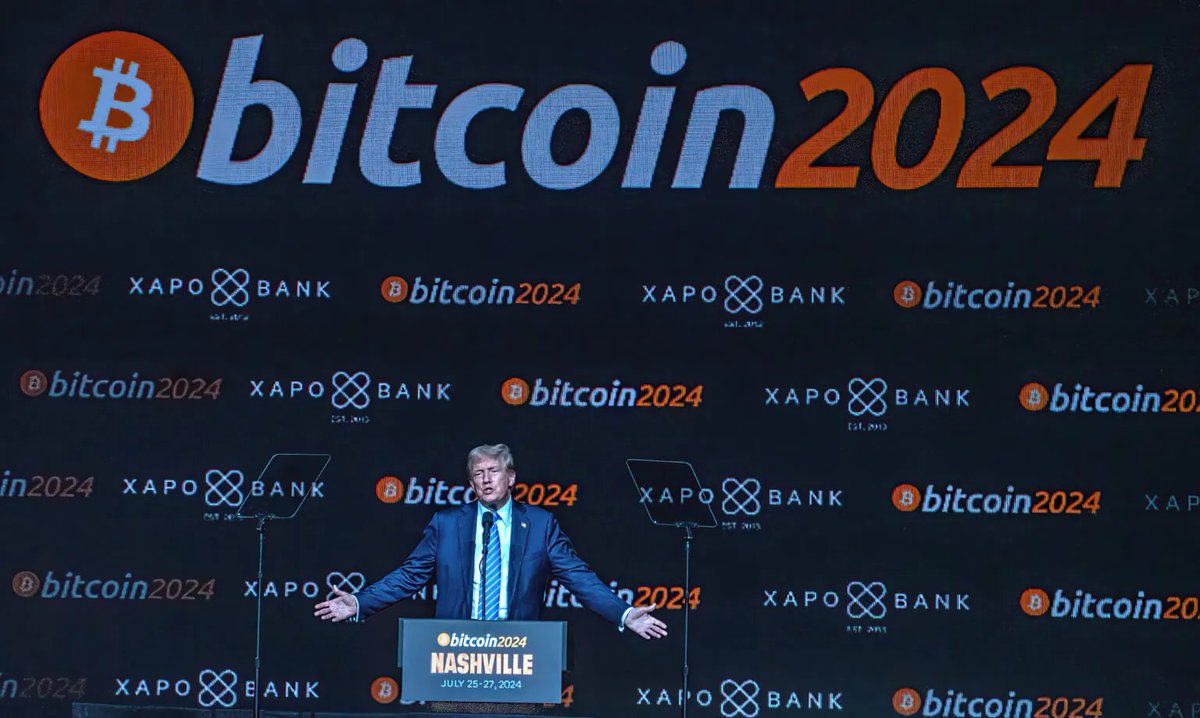
From X
Disclaimer: The above content reflects only the author's opinion and does not represent any stance of CoinNX, nor does it constitute any investment advice related to CoinNX.