

We’re celebrating the upcoming launch of Orange Standard the right way!
$2,500 in Bitcoin
25 winners
$100 each
To enter:
Follow @OrangeStandardX
Like + repost this post
Join the waitlist

Attacks on oil and natural gas infrastructure in regions that are critical to global energy supply, especially in the Middle East, are not just routine geopolitical developments for markets.
Moves like this can directly trigger supply shocks and create pressure that spreads across the world through energy prices.
A contraction on the supply side like this has the potential to slow economies down while also pushing central banks back toward more expansionary and aggressive monetary policy.
And that combination can create the foundation for a type of inflationary wave that is historically rare.
The most important part of these periods is how markets actually price them.
Markets often move higher in the middle of fear.
Just like during the pandemic, prices can keep rising even when risk perception is at its peak, and most people struggle to believe the move for a long time.
As a result, those who are still outside the market hesitate to enter because uncertainty feels too high.
And those who are already inside start looking for the exit on the first pullback.
That is what makes this one of the hardest psychological phases of a market, but also one of the most opportunistic.
JUST IN: 🇺🇸 SEC approves Nasdaq rule to allow tokenized stocks & securities trading.

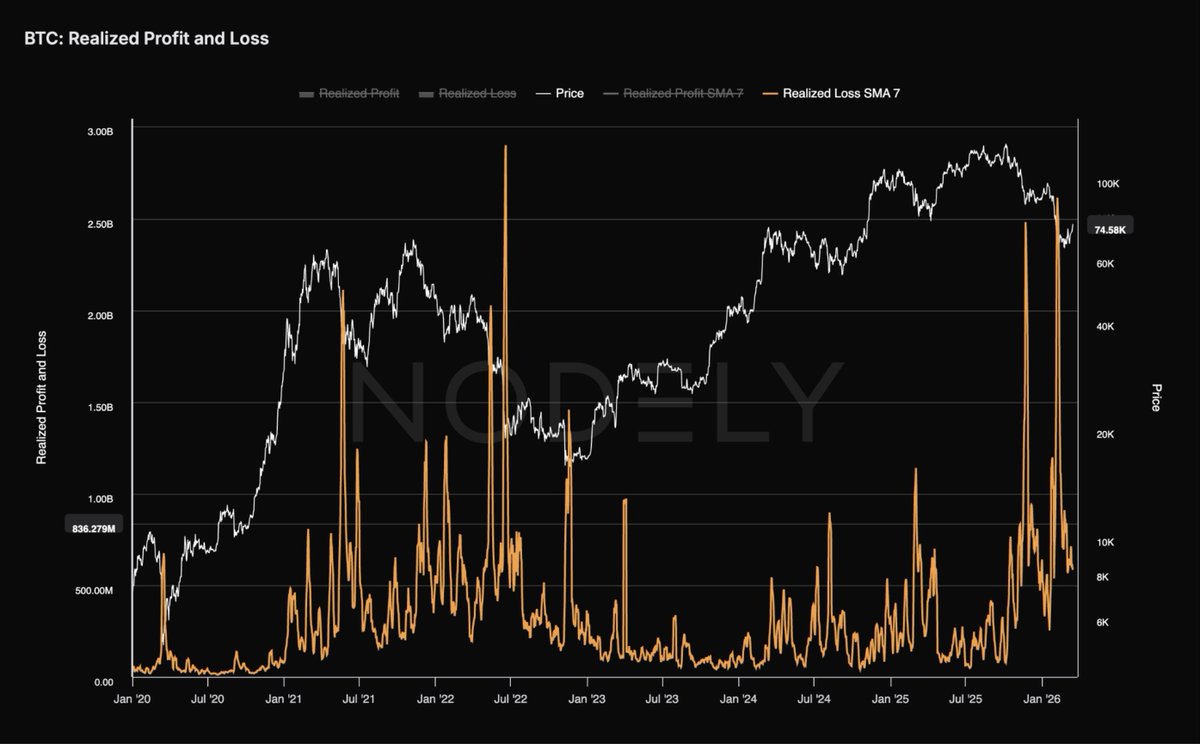
Realized losses (SMA7) are extremely elevated.
→ 6x higher than the COVID crash
→ 2x higher than the FTX collapse
But this is not because we are going through a similar crisis.
This is happening because over $600B of liquidity that was accumulated above $100K is starting to change hands.
In other words, distribution.
Bitcoin is moving from weak hands to strong hands.
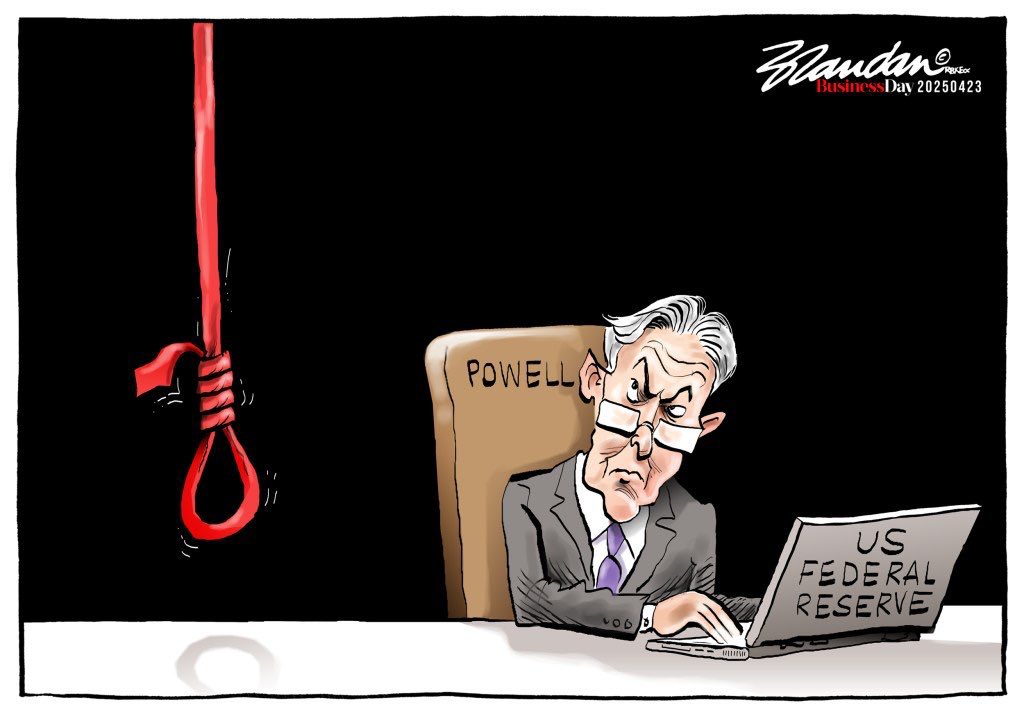
The Fed is announcing its rate decision today.
This could end up being one of the most important and most difficult meetings of the year.
Right now the Fed is sitting in the middle of two major forces.
→ Geopolitical risk tied to the US Iran situation
→ The possibility of inflation starting to heat up again
So this meeting is not just about rates.
It is also about how the Fed plans to deal with both of these pressures going forward.
Market expectation is mostly dovish.
Why?
→ Powell’s recent communication style
→ The stronger narrative that the US economy has stabilized
→ The sense of geopolitical relief and strength signaling after the Venezuela process
→ The way markets have adapted faster than expected to tariffs and the new setup
But a hawkish tone is still very possible.
Especially because of two things.
→ Oil
→ Fertilizer
Both matter more than people think because they can quietly rebuild inflation pressure from the base.
So there is still a real chance the Fed leans into the idea that inflation could harden again.
And we already know Powell’s usual style.
He avoids giving clear direction.
He stretches the process.
And he keeps pushing clarity further out.
That is why tonight is not only about the decision.
The tone will matter just as much as the rate itself.
We will see.
Just remember:
Everyone sees the decision.
Only the prepared catch the direction.
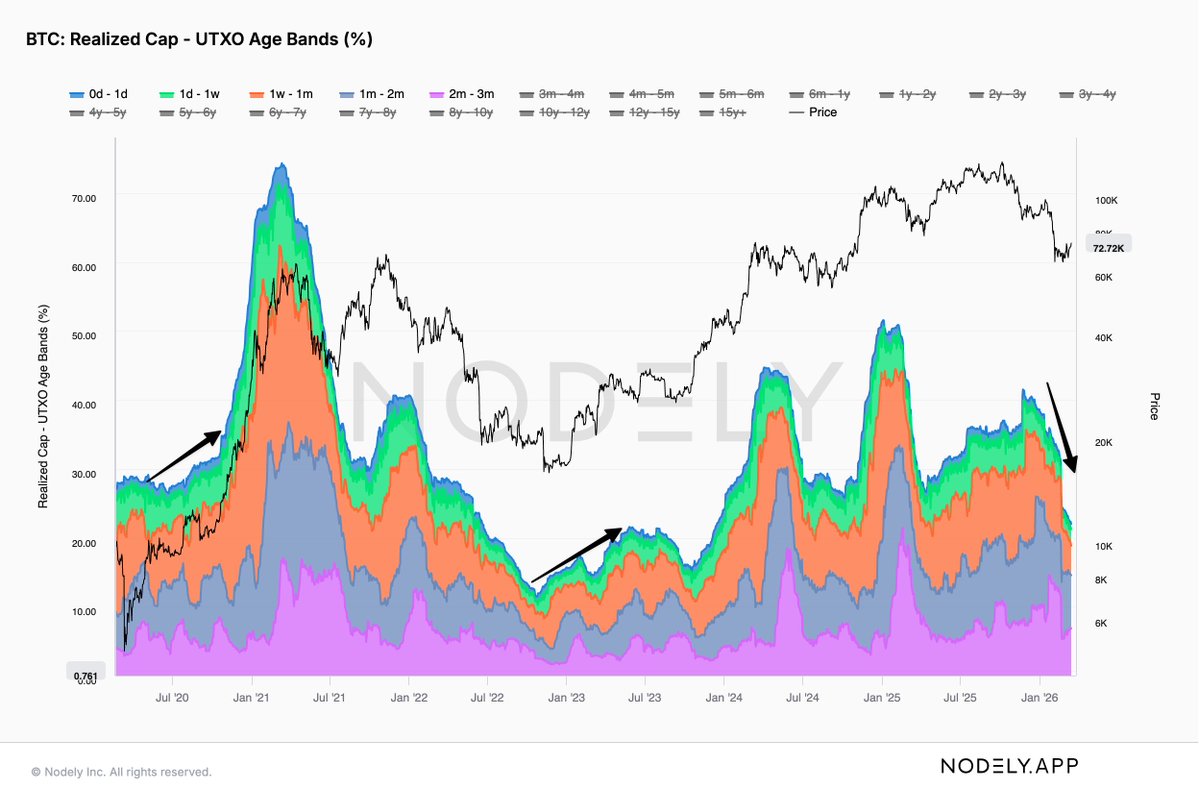
What metric gives the first real signal of recovery?
There are hundreds of metrics you can use to track Bitcoin.
But when it comes to spotting a real recovery, one of the most important is the share of new investors entering with new liquidity.
If I asked what a real move higher needs, you’d probably say two things:
1. New money
2. New investors
And the nice part is that this is actually very easy to track on-chain. 👇
After both the COVID crash and the FTX collapse, you can see this metric slowly starting to rise again.
That’s important, because real recoveries usually do not begin with price alone.
They begin with participation.
And yes, I do think we’ll eventually see this kind of rise again.
But for now, I think it’s still too early to say that signal is here.
One signal I usually watch for is early network?
DEMAND.
@diamante_io reportedly had 1.5M+ users interacting with the testnet before mainnet launch, which says a lot about the curiosity around quantum-secure infrastructure.
With mainnet now live, the interesting question is how quickly developers and users actually start building on it.
Post-quantum security is a niche today, but that might not stay the case forever.

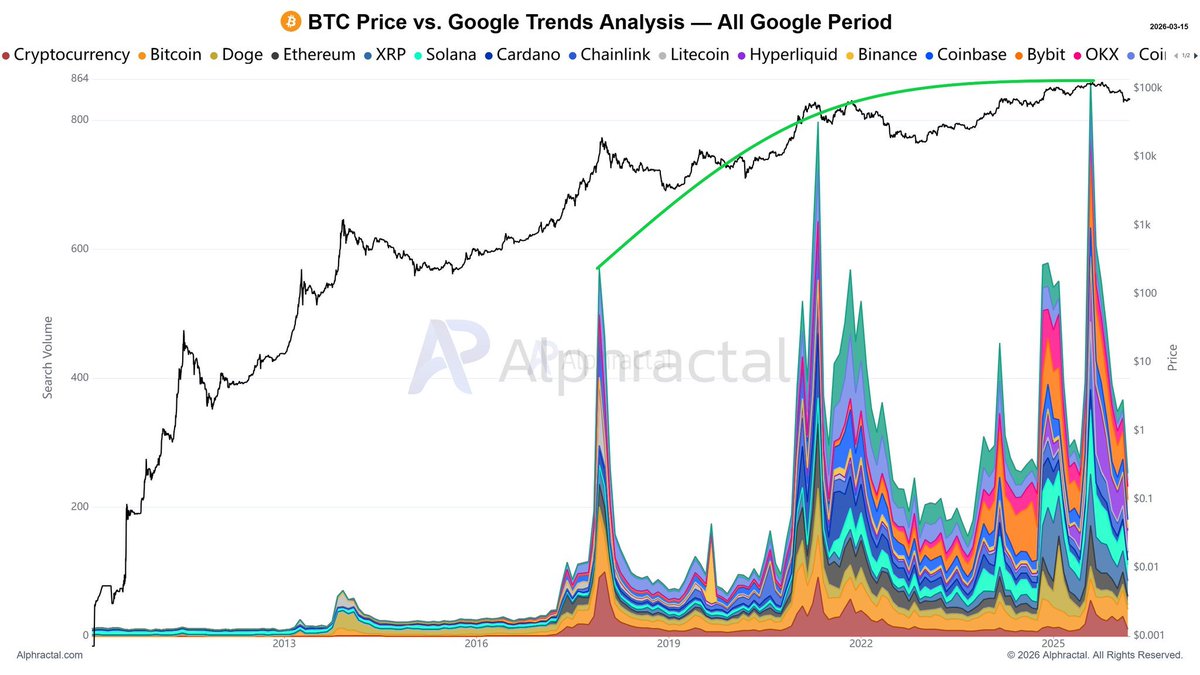
Google Trends is one of the simplest ways to read crypto investor emotion.
And the 400 level looks more important than most people realize.
In every bull cycle, crypto-related search interest has expanded.
2017 peaked around 450.
2021 pushed to 580.
2025 went above 750.
Each cycle pulled in more attention than the last.
Right now, we’re sitting around 300.
That tells me retail still isn’t fully awake.
And when you look at the last 3 bull cycles, 400+ stands out as a key threshold.
At the start of major bullish phases, crypto search interest tends to move above 400 pretty quickly.
So if you care about sentiment, that’s a level worth watching.
What crypto-related term do you search most often on Google?
ETH went from $1,400 to $80.
That was a 17.5x drawdown for anyone who bought the top.
Did Ethereum fail?
No.
SOL went from $260 to $8.
That was a 32.5x drawdown for anyone who bought the top.
Did Solana fail?
No.
BTC went from $20,000 to $3,000.
Then from $69,000 to $15,000.
Did Bitcoin fail?
No.
Every market has examples like this.
Only fools judge an asset by the pain of people who entered badly and managed risk even worse.
At some point you have to stop blaming the market for your own failure.
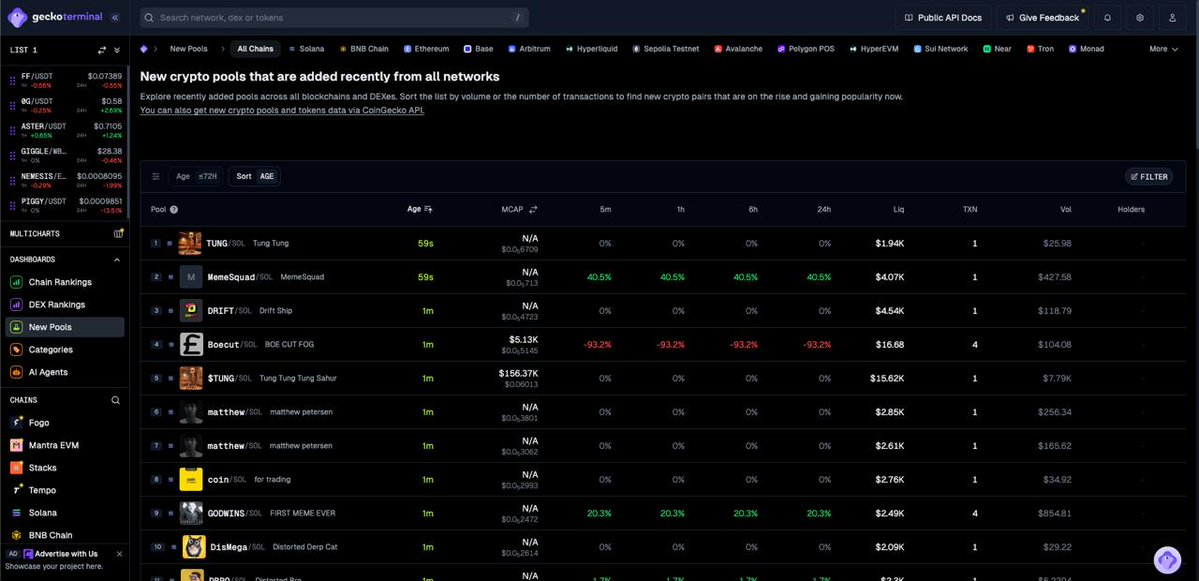
I stopped trusting trending lists the moment I learned they could be bought.
That’s when I started relying more on @GeckoTerminal.
What I usually check now is the Trending Pools / New Pools section.
It shows on-chain activity across DEXs, so you can quickly see which pools are actually gaining traction rather than just being promoted.
When you pair that with the raw liquidity and transaction data, it becomes much easier to separate genuine momentum from noise.
🔗 If you’re trading on-chain regularly, it’s worth exploring yourself:
https://t.co/1iu6BYBAPG
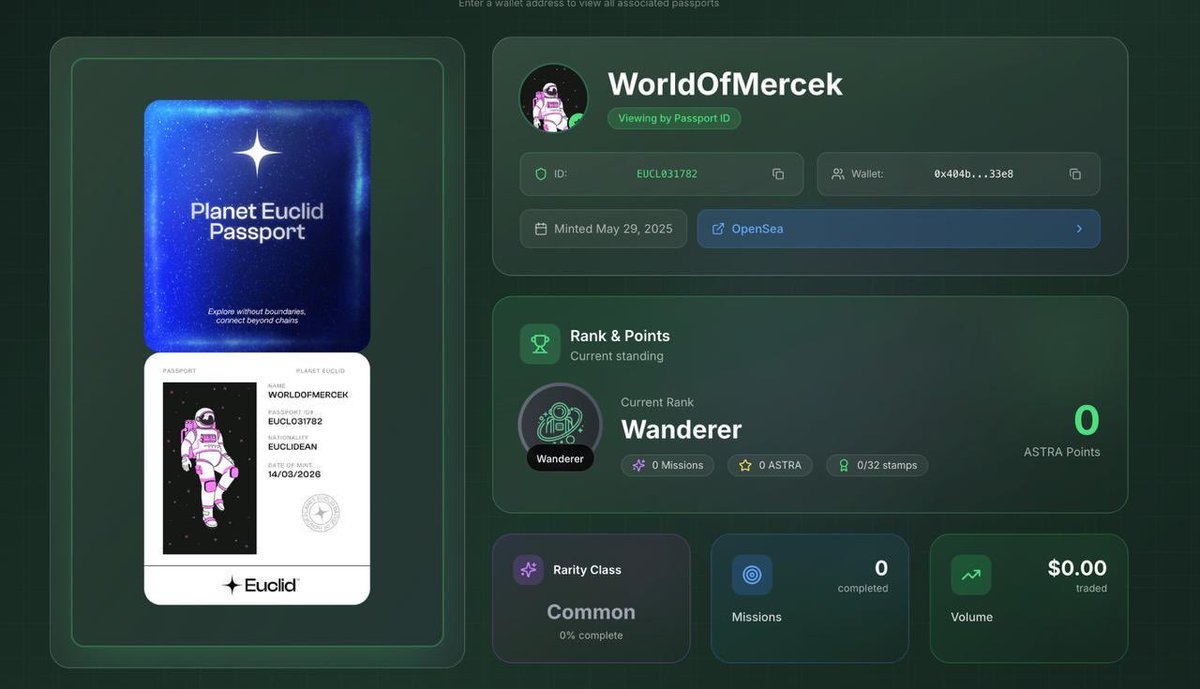
The gates are now open wider at @EuclidProtocol!
155K Passport holders now have access to the Private Mainnet: swaps, liquidity, yield.
What’s interesting to me is the design: one liquidity pool across 50+ chains without bridging or fragmented liquidity.
They’re also rolling out Euclid Swap and Euclid Launch, which should make the ecosystem more complete over time.
Phase 2 feels like the moment where early LPs position before the crowd.
Once public mainnet opens and liquidity floods in, yields won’t look the same.
Minting is closed, so the only way in now is the Euclid Passport on secondary.
Mainnet + TGE expected H1 2026
For those interested, passport links + my code in first reply 👇🏻
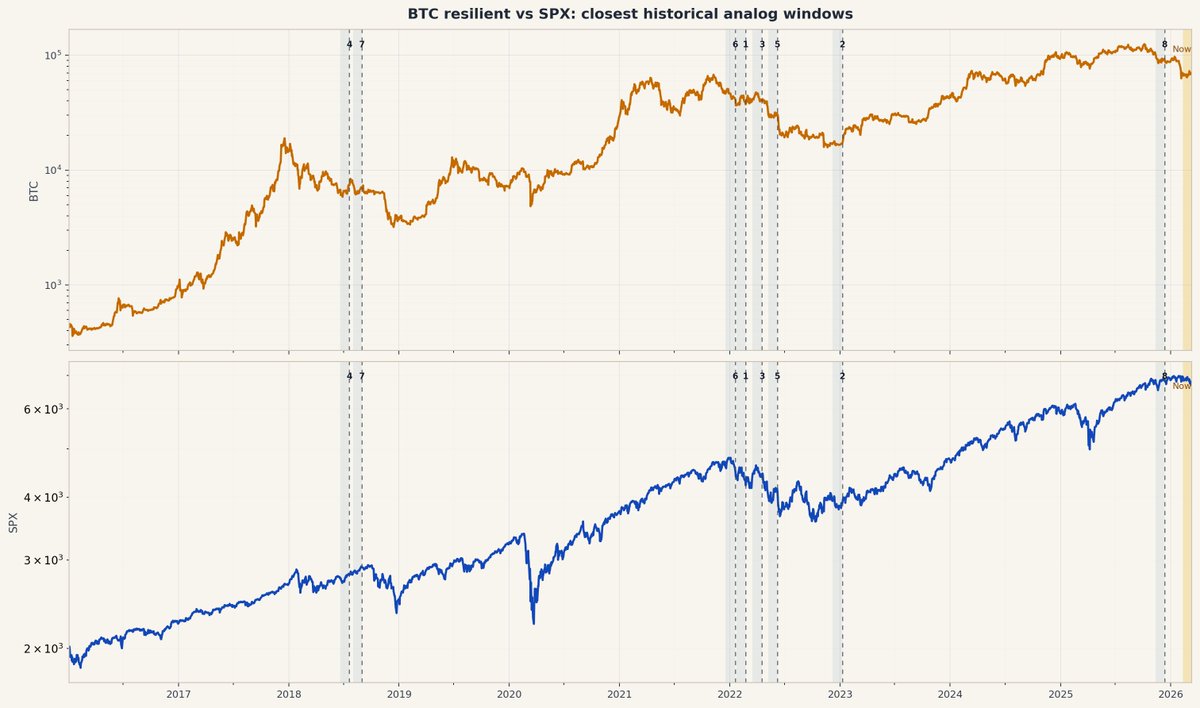
@ChemistDeFi I wouldn’t call it “decoupling” just yet
On one side you have an index made up of 500 companies, which naturally moves slower and more smoothly. On the other side you have BTC alone, a much higher-beta asset. Expecting both to move in perfect sync isn’t really the cleanest
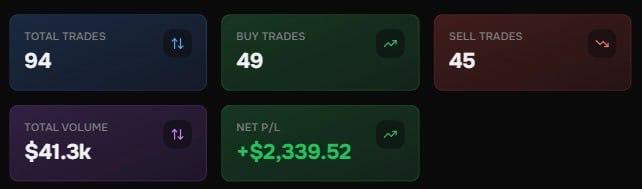
Spent some time testing @solanafunded during beta.
Tbh it completely changes how you approach trench trading.
When you trade with larger capital, you start thinking very differently about entries and risk rather than chasing the next 100x
The concept is simple:
pass their evaluation → get access to up to $100k funded capital to trade on Solana
Profit split goes up to 90%, payouts are instant and on-chain, and they’ve got $5M+ proof of reserves
🔗 If you’re a good trader but undercapitalized, this is pretty interesting: https://t.co/QFaKuA79m1
Disclosure: working with SolanaFunded to bring you this info.
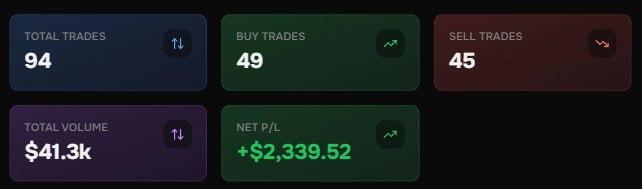


Spent some time testing @solanafunded during beta.
Tbh it completely changes how you approach trench trading.
When you trade with larger capital, you start thinking very differently about entries and risk rather than chasing the next 100x
The concept is simple:
pass their evaluation → get access to up to $100k funded capital to trade on Solana
Profit split goes up to 90%, payouts are instant and on-chain, and they’ve got $5M+ proof of reserves
🔗 If you’re a good trader but undercapitalized, this is pretty interesting: https://t.co/qMzfzkTsuk
Disclosure: working with SolanaFunded to bring you this info.
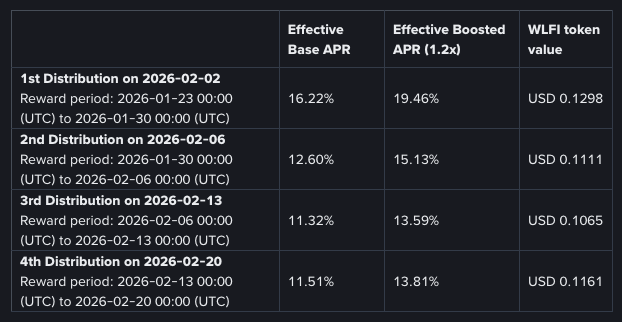
Stablecoin incentives are literally becoming a battleground.
And this move from @binance & @worldlibertyfi is the proof.
They decided to extended the USD1 campaign, where holders share 235M $WLFI tokens via weekly distributions based on balance snapshots.
Interesting structure too: balances in margin/futures collateral get a boost, which subtly encourages deeper platform liquidity.
🔗 Might be worth looking into the mechanics: https://t.co/3OjP2zw2ZQ
A lot of people said they wanted mass adoption.
What they really wanted was mass adoption with 2021 style easy money.
That was never how this was going to work.
Back when this market was smaller, messier, and less efficient, just being early could make you look smart.
Now there’s more attention, more capital, more competition, and way less room for lazy mistakes.
As markets mature, inefficiencies shrink, execution matters more, and sloppy positioning gets punished harder.
Back then being early was enough.
Now you actually have to be good.
The casino phase made a lot of people feel talented.
This phase will show who really leveled up.
People keep asking the wrong question about AI agents.
“Will they use cards or stablecoins?”
That’s not really the divide.
The real split will be between two completely different economies.
→ Human-directed agents
→ Agent-to-agent economies
And they will run on very different rails.
First layer: human-directed agents.
This is the version most people imagine right now.
You tell ChatGPT or Claude:
“Buy the ingredients for dinner.”
“Book me a flight and a hotel.”
Your AI agent executes the task.
This will mostly run on existing card infrastructure.
Visa, Mastercard, Stripe and others are already building for this.
Your agent becomes something like a very capable digital assistant.
It shops for you.
Handles subscriptions.
Manages errands.
But under the hood it is still your money, your authorization, your rails.
This is an evolution of ecommerce.
Not a revolution.
The second layer is where things get more interesting.
Agent-to-agent commerce.
No humans in the loop.
An AI agent buying services from another AI agent.
Data.
Compute.
Software.
Analysis.
Market signals.
Entire micro-economies forming between autonomous systems.
And this is where card rails start to break.
Cards require human onboarding.
They have fixed fees.
They do not scale well to millions of autonomous actors spinning up instantly.
You cannot run an economy of microtransactions at $0.30 per payment.
This is where stablecoins and blockchains make more sense.
An agent can spin up a wallet in seconds.
It can send value instantly.
At fractions of a cent.
No bank account.
No approval layer.
No manual setup.
That changes the scale of what is possible.
Instead of a few assistants buying things for humans, you could have thousands of agents coordinating work.
Or millions.
Imagine an autonomous trading firm:
One agent scans markets.
Another executes trades.
Others manage risk, data, and research.
Each one paying sub-agents for information or compute.
All running 24/7.
No human signing every transaction.
This still sounds like science fiction.
But look at where the infrastructure work is happening.
Stripe.
Visa.
Coinbase.
Circle.
Ethereum.
Solana.
They are all building pieces of this future.
So the real takeaway is not “cards vs stablecoins.”
It is this:
Cards will help agents shop inside the old economy.
Stablecoins will help agents build a new one.
And that distinction matters more than people think.
Because once software starts becoming an economic actor, it will not want bank hours, payment friction, approval chains, or 30-cent toll booths.
It will want money that moves as fast as the internet.
That is where this is heading.
Most people are still imagining AI as a better assistant.
The bigger shift is AI becoming a participant in the economy itself.
And when that clicks, you stop asking whether agents will use cards or stablecoins.
You start asking which financial system was actually built for non-human commerce.
That question has a very different answer.
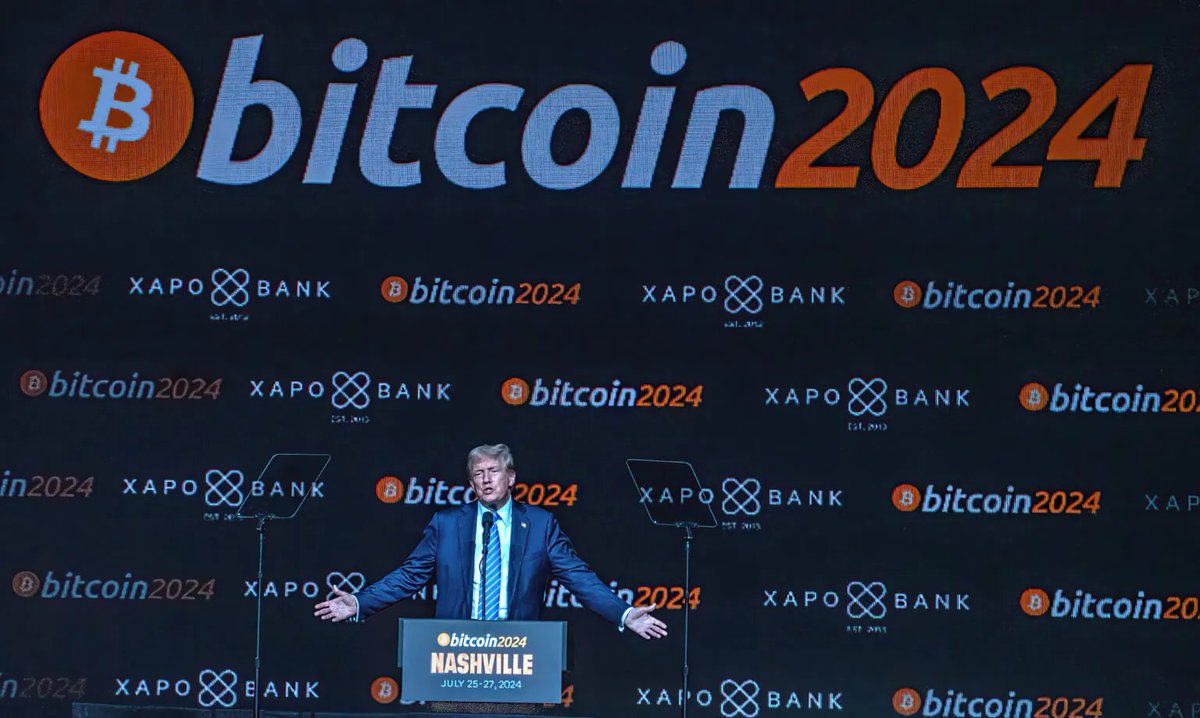
I still remember watching the Bitcoin conference in 2024 and feeling completely out of sync with the room.
Everyone around it seemed excited. The crowd was hyped, social media was calling it historic, and the general mood was basically: this is huge, Bitcoin finally made it.
A lot of people saw that moment as validation. One of the most powerful political figures in the world was on stage talking about Bitcoin, giving it visibility, giving it legitimacy, making it feel like a breakthrough.
But I remember feeling uneasy instead.
Not because Bitcoin was getting attention, but because the way it was being framed felt wrong to me. There’s a big difference between Bitcoin being recognized and Bitcoin being absorbed into someone else’s political story. And that day, it didn’t feel like Bitcoin was being understood. It felt like it was being used.
That was the part a lot of people did not want to hear.
I understood why people were celebrating. After years of watching Bitcoin get mocked, dismissed, attacked, and treated like something fringe, seeing it acknowledged on a stage that big felt like a win. For a lot of people, it felt like the system had finally stopped ignoring it.
But that’s also where the danger starts.
Because the system noticing Bitcoin is not the same thing as the system trying to wrap itself around Bitcoin. Understanding it is one thing. Turning it into a political instrument is another.
And when I listened closely, I did not hear someone trying to understand Bitcoin on its own terms. I heard someone trying to fit Bitcoin into a familiar political script: create fear, define enemies, present yourself as the protector, and gather loyalty around that framing.
That logic may work in politics, but it has never fit the core of Bitcoin.
Bitcoin was never supposed to be a savior narrative. If anything, it was built to reduce the need for saviors.
When I said some of this back then, a lot of people thought I was being too negative or too suspicious. But my point was actually simple: it is one thing for Bitcoin to gain space, and another thing entirely for Bitcoin to become a badge inside a political identity war.
At the time I remember thinking, one day this will make more sense to people.
Not because I thought I was smarter than everyone else, but because political support is rarely pure. Most of the time it comes with incentives. And when political figures support something, they usually do not just want to stand next to it. Eventually they want to shape it, redirect it, and make it serve their own narrative.
That was my concern then, and honestly it still is now.
The only thing that changed is that today more people can see it too. Politics does not move toward Bitcoin because it suddenly understands the ethos. It moves toward Bitcoin because Bitcoin is useful: a crowd, a symbol, a narrative, a source of momentum.
That difference matters.
Because accepting the value of something is very different from trying to use it to increase your own power. The first can be real support. The second usually comes disguised as support while quietly reaching for control.
Looking back now, I realize my reaction that day was never really about one speech. It was about something bigger. It was about seeing Bitcoin slowly pulled away from its own nature and pushed into a political costume that never really fit it.
And I still think the real issue is not who supports Bitcoin. It’s how they support it.
Sometimes open hostility is easier to deal with because at least you know where it stands. What is harder to deal with is support that comes wrapped in ownership, influence, and hidden expectations.
Back in 2024, saying this made you sound paranoid. Today it sounds a lot less crazy.
Funny enough, back then I thought maybe people would understand it in ten years.
Turns out two was enough.
Emerging trend in Web3: communities becoming talent pipelines.
Instead of hiring externally, projects are identifying contributors directly from their own ecosystem.
@DlicomApp’s Regional Hunt leans into that model with structured roles, contributor visibility, and a clear progression path inside the community.
Phase 2 is now open, expanding the program to 8 regions.
The interesting part: strong contributors can eventually move into paid regional lead or helper roles.
🔗 If you’re active in Web3 communities, this might be an interesting place: https://t.co/jhCH1pk4YK


Price is only half the story in Bitcoin.
The other half is behavior. And onchain is where you see it.
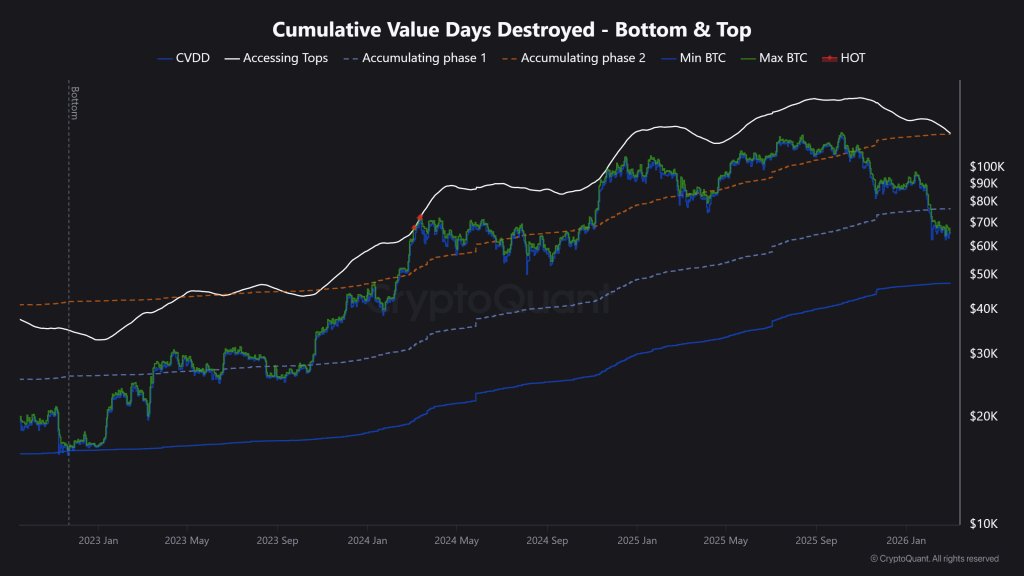
One metric I keep coming back to is CVDD.
It’s a simple way to track when long dormant BTC finally moves, and what that usually means for cycle bottoms.
Here’s the clean breakdown:
What CVDD Actually Measures
CVDD = Cumulative Value Days Destroyed.
Every BTC has an “age.”
When coins that haven’t moved in a long time finally move, a lot of “coin days” get destroyed.
So CVDD is basically a model built around one question:
When do long term holders stop sitting still, and when do they start accumulating again?
That’s why it’s useful.
It’s not trying to read short-term traders.
It’s trying to read the slow money.
How It Tends To Behave
Historically, CVDD has often lined up with “bottom zones” more than “bottom candles.”
Because most bottoms aren’t one magical wick.
Most bottoms are a process.
What Past Cycles Rhymed Like
You can look at older cycles and notice the same pattern showing up again and again:
➜ After a big unwind, price often drifts toward the CVDD zone
➜ It hangs around that area for a while
➜ Then the next cycle starts building from there
There are exceptions.
March 2020 was a liquidity shock. Price tagged the zone fast, then bounced fast.
But the more common version is slower:
Price comes down.
Price chops.
Price spends time.
Why The “Bottom Process” Takes Time
People love asking “Is this THE bottom?”
That’s usually the wrong question.
Bottoms often include:
➜ Weak hands getting shaken out
➜ Volatility cooling off
➜ Interest and hope bleeding out
➜ Long-term holders quietly stepping back in
➜ Price building a base while sentiment stays disgusting
That psychology does not resolve in a weekend.
Which is why CVDD is better used as a zone and time tool, not a single price tool.
Where CVDD Is Pointing Right Now
Right now, the CVDD reference level sits around $47.5K.
That does not mean “$47.5K is guaranteed bottom.”
It means:
If Bitcoin is still behaving like a cyclical asset, that area has historically been a meaningful region where the bottoming process can happen.
Could price wick below it? Sure. That’s happened before.
But the key thing most people miss is this:
The longer price spends building around a major reference zone, the healthier the base usually becomes.
Fast V-bounces feel good. Slow bases tend to be what cycles are built on.
How I Use It Practically
I don’t treat CVDD like a buy signal.
I treat it like a behavior filter.
When price is approaching CVDD, I’m watching:
➜ Does price spend time or just touch and bounce?
➜ Does volatility compress after the panic?
➜ Do long-term holder behaviors start stabilizing?
➜ Does sentiment stay ugly while structure improves?
That combination is usually where the real cycle setups form.
One Important Note ✍️
CVDD is not “the one metric.”
No onchain metric is.
But CVDD has earned respect because it’s tied to something real:
Long held coins finally moving. Long term conviction breaking or returning.
That’s a much cleaner signal than most narrative noise.
The Real Takeaway
The question isn’t “is $47.5K the bottom?”
it's “if the cycle structure is still intact, is this the zone where the bottom gets built?”
Because Bitcoin bottoms usually don’t print as one perfect candle.
They form the way sentiment breaks, then heals: price tests, chops, retests, spends time, and only then does the next leg become obvious in hindsight.
So im less focused on calling a number, and more focused on watching the process.
NFA.