


Big slice of $XRP supply has never touched DeFi.
Not because holders don’t want yield. Because the path to get there was genuinely broken.
FAssets v1.3 mainnet went live on @FlareNetworks to fix it 👇
◢ The Structural Problem
XRP is the second largest non-stablecoin asset by exchange holdings.
Almost none of it is in DeFi.
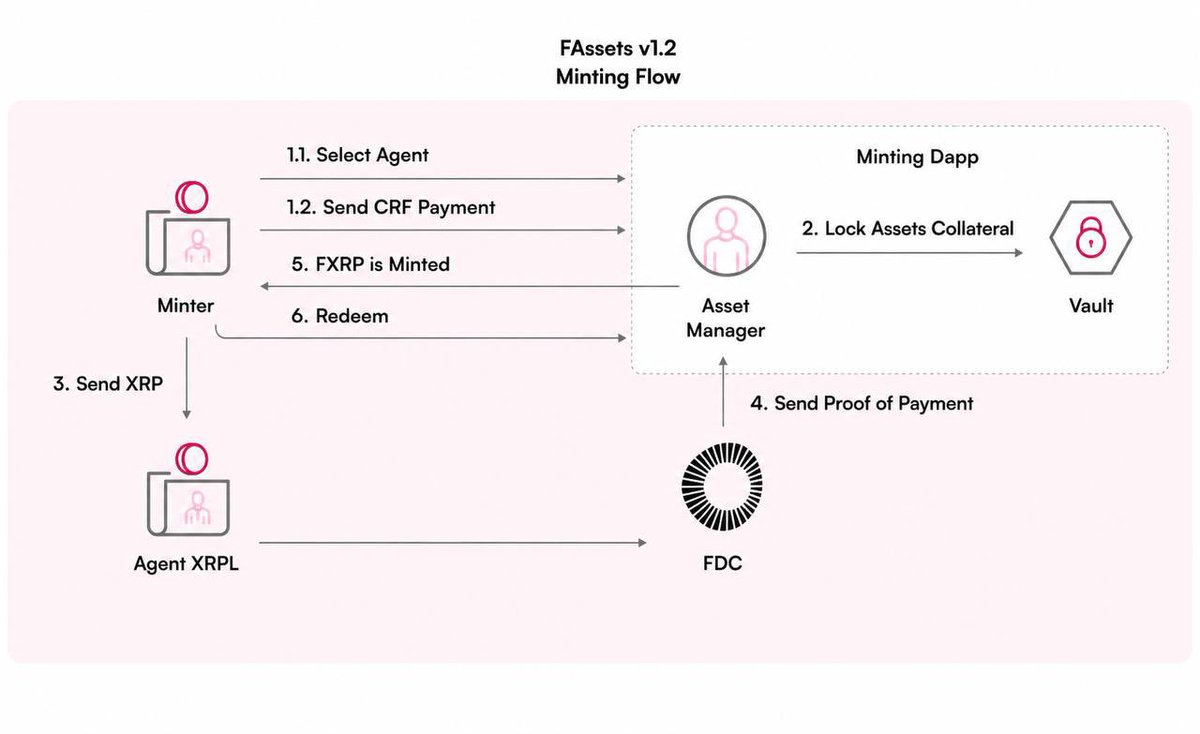
Before v1.3, minting FXRP required selecting a specific agent, working around their collateral availability, completing a reservation step, and executing smart contract interactions that no exchange supports natively.
Exchanges process withdrawals as standard XRPL transactions out of hot wallets.
They don’t run Flare contract logic on behalf of users.
That mismatch meant the XRP sitting across Binance, Kraken, OKX, Coinbase and everywhere else was operationally unreachable by FAssets.
The infrastructure existed. The distribution path didn’t.
◢ What v1.3 Changes
v1.3 reduces the entire mint flow to a single XRPL transaction with a destination tag.
Reserve a tag once, map it to your Flare address, and every mint after that runs as a standard XRPL withdrawal.
An executor relays proof of payment to Flare where the mint completes.
Destination tags are already how every exchange credits accounts, how every custodian routes payments, how every XRPL wallet labels deposits.
Flare didn’t ask the XRP ecosystem to learn something new. They built the mint path around what already exists everywhere.
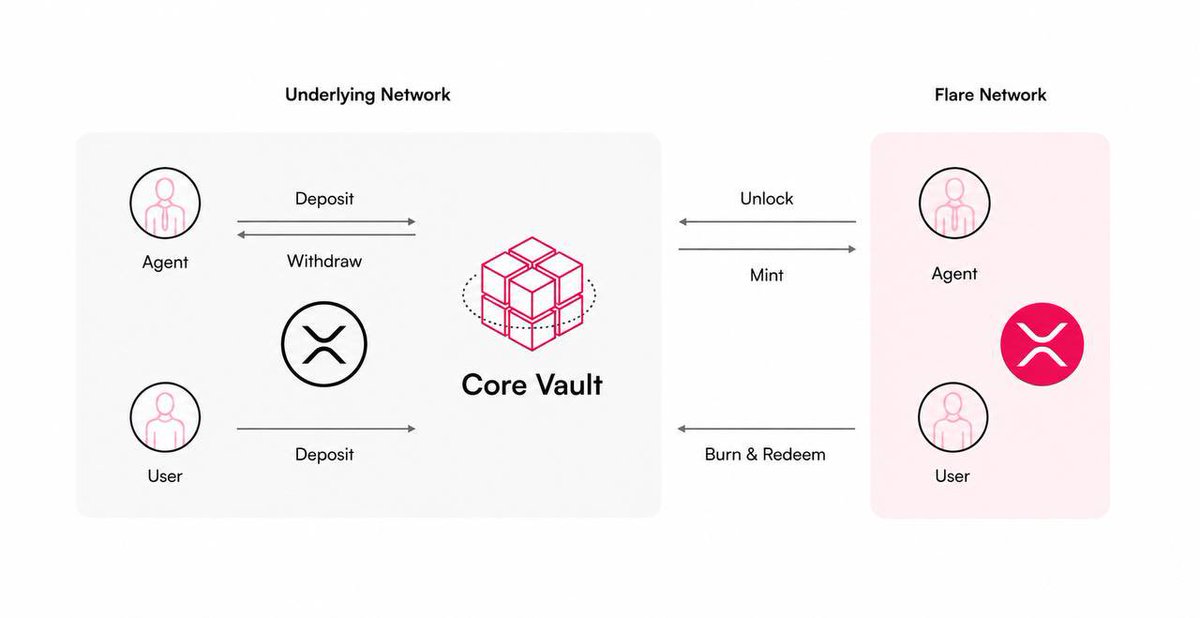
Redemption mechanics are unchanged: agents, overcollateralization, liquidation rails all remain in place on the way out.
The safety model is intact. The entry point moved.
◢ Why No Bridge Competes
This is worth being precise about.
Squid, wXRP, and other bridge solutions don’t offer a CEX-direct mint path in the same class as v1.3. A destination-tagged XRP withdrawal that routes directly into another chain’s DeFi ecosystem is a Flare-specific capability: nothing else has built this for XRP at the exchange layer.
155 million FXRP minted and the ecosystem hasn’t come close to the available surface.
The reason is distribution, not demand.
◢ Exchange and Wallets Calculus
Exchanges are built to keep users on their own rails.
That’s rational. v1.3 changes what it costs them to change that.
The integration surface for FXRP minting went from “build Flare-aware contract choreography into your withdrawal flow” to “treat it as a destination-tagged XRP withdrawal.”
That’s a fundamentally different conversation to have with an exchange’s engineering team. The barrier dropped.
The first exchanges to move get the XRPFi narrative.
The ones that wait explain to users why competitors have it.
Flare doesn’t need to apply pressure. The race runs itself.
◢ What’s Actually Unlocked
v1.3 sits between v1.2 and the full v2 vision: it pulls forward direct minting and tag-based routing without touching the redemption-side collateral structure.
What it actually delivers is distribution surface.
Wallets, exchanges, custodians that already route XRP through destination tags now have a direct integration path for FXRP minting.
An exchange withdrawal becomes a mint. A custodian flow does the same.
XRPFi doesn’t scale through more apps built on Flare alone.
It scales when the surfaces XRP holders already trust can move them into productive onchain positions without asking them to change tools.
v1.3 isn’t the product. It’s the precondition.
Uphold, VivoPower, every integration Flare has lined up: none of it scales without a mint path that exchanges and custodians can actually run.
That path exists now. The floodgates aren’t a metaphor anymore.


From X
Disclaimer: The above content reflects only the author's opinion and does not represent any stance of CoinNX, nor does it constitute any investment advice related to CoinNX.